ReactJS is a component-based JavaScript library used to build dynamic and interactive user interfaces. It simplifies the creation of single-page applications (SPAs) with a focus on performance and maintainability.
React is one of the most demanding JavaScript libraries because it is equipped with a ton of features which makes it faster and production-ready. Below are the few features of React.
React uses a Virtual DOM to optimize UI rendering. Instead of updating the entire real DOM directly, React:
React follows a component-based approach, where the UI is broken down into reusable components. These components:
React uses JSX, a syntax extension that allows developers to write HTML inside JavaScript. JSX makes the code:
React uses one-way data binding, meaning data flows in a single direction from parent components to child components via props. This provides better control over data and helps maintain predictable behavior.
React manages component state efficiently using the useState hook (for functional components) or this.state (for class components). State allows dynamic updates without reloading the page.
Hooks allow functional components to use state and lifecycle features without needing class components. Common hooks include:
React provides React Router for managing navigation in single-page applications (SPAs). It enables dynamic routing without requiring full-page reloads.
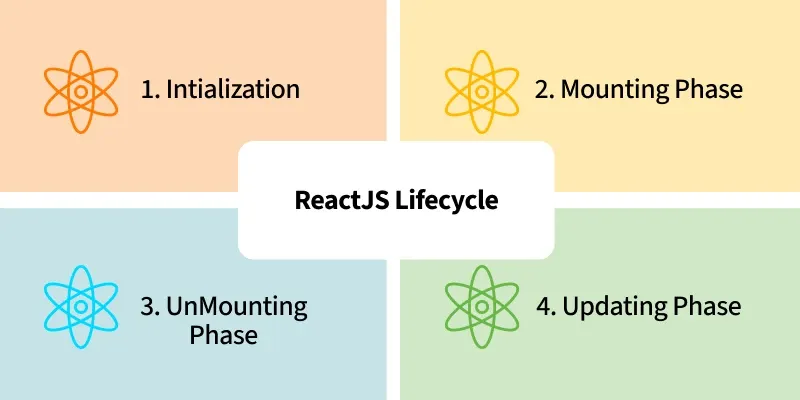
Every React Component has a lifecycle of its own, the lifecycle of a component can be defined as the series of methods that are invoked in different stages of the component’s existence. React automatically calls these methods at different points in a component’s life cycle. Understanding these phases helps manage the state, perform side effects, and optimize components effectively.
import React from 'react';

function App() {
  return (
    <div>
      <h1>Hello, World!</h1>
    </div>
  );
}

export default App;